Why FaithCore Lab
Education used to build a Core. Somewhere along the way, it settled for installing apps.
FaithCore Lab exists to build the Core first — what a student believes is true, who they are, and how they should live — and to do it to the standard of the best digital-first learning, brought to Christian education — in the classroom, at home, or a hybrid of both; teacher-led, self-paced, or anywhere in between.
The future is changing faster than any curriculum can reliably anticipate. So students need anchors: what is true, who they are, and why they were created. That conviction runs through everything we build — the Bible taught as one story that lands on Jesus, formation that helps a student live it, and academics that form discernment rather than store facts.
We build for the age students actually live in. When any fact can be retrieved in an instant, memorization alone is no longer enough. Students still need knowledge — our students memorize Scripture in every grade — and they need the discernment, application, and biblical thinking to use it well. So our courses test hard — on knowledge, understanding, and reasoning. What we never grade is belief.
FaithCore Lab’s method is personal to its founder, who earned his own college degree online when the format was brand new and spent the next three decades building online learning for corporations and universities before turning that craft toward Christian education. It is refined in real classroom use before it reaches yours — tested, not theoretical. Read his note on why he built FaithCore →
Our name says our method: Truth · Formation · Purpose.
Rooted in Scripture. Built for purpose.
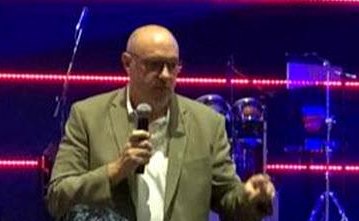
A note from our founder
“When I joined the U.S. Navy Reserve, I was introduced to something that would shape the rest of my career: online education. Later, I began teaching high school Bible, U.S. History, and World History — and what I discovered surprised me.”
Read the founder’s note →“The greatest legacy you can pass on to your children and grandchildren is not your money or the other material things you have accumulated in life. The greatest legacy you can pass on to them is the legacy of your character and your faith.”— Billy Graham, Nearing Home (2011)
We wrote our own organizational Constitution — a document that states plainly what we stand for, what our mission is, and how we hold ourselves to it: every claim verified, every change made in writing, Scripture as our North Star. It is why our standards don’t drift with the culture.
— from the FaithCore Lab Constitution
What We Believe
We hold to the historic evangelical Christian faith, non-denominational Protestant in expression — the Bible as God's Word, one God in three persons, and salvation by grace alone through faith alone in Christ alone.
Read our Statement of Faith → Our editorial standards →Theological Review & Accountability
Who reviews the theology.
Sound doctrine is not left to chance. Every course passes a governed review before it is released: it is checked against our published Statement of Faith and Editorial Standards, and against our own written Constitution — a doctrinal and editorial gate that no lesson skips.
In practice that means: printed Scripture quotations are checked word-for-word against the published text of the named translation; every claim is verified and every change is made in writing; sensitive content is handled with a documented care standard; and Christ is kept central — Lord and Savior first, model second. Where Scripture speaks clearly, we teach with conviction; where faithful Christians differ, we teach students how to think, not what to conclude. As we grow, this review is being extended to a standing theological advisory process, so the accountability only deepens.
How We Teach
No Partisanship. No Intellectual Shortcuts.
We do not teach politics. You will not find partisan positions, political commentary, or culture-war framing in any FaithCore Lab course — not because these questions don't matter, but because our calling is different: we teach the whole story of Scripture, centered on Jesus — His words, His example, His way — and we train students to think.
That second part matters as much as the first. We don't protect students from hard questions; we prepare them for hard questions. Our courses deliberately put tough issues in front of students and ask them to research, weigh evidence, hear the strongest version of views they don't hold, and reach their own reasoned conclusions — with the Bible as their North Star.
Where Scripture speaks clearly, we teach with conviction. Where faithful Christians differ, we teach students how to think, not what to conclude — and we grade their reasoning, their evidence, and their conduct in disagreement. Never their positions. Never their hearts.
And we teach students to listen. Scripture says to be quick to listen and slow to speak (James 1:19), and that answering before hearing is folly (Proverbs 18:13) — so we treat listening as the first act of critical thinking and the first act of loving your neighbor. Our students learn to hear the strongest version of what someone else believes, to discern what's actually being said, and to look first for common ground — the way Paul stood in Athens and began with what his hearers already knew (Acts 17:22–28). And they learn the humility Jesus praised in children: the willingness to keep learning (Matthew 18:3–4). That posture is not optional for the world they're entering — a world that will change faster every year of their lives. The students who flourish in it will be the ones who never stop learning, never stop adapting, and never lose their anchor while everything else moves.
The world will hand your student controversy whether anyone prepares them or not. We'd rather they meet it with a trained mind and an anchored soul as their core.
A trained mind. An anchored soul.
That's what we mean by critical thinking.